

Adaptive damping is no longer limited to high-end vehicles. It is now common across a wide range of platforms, which means technicians need to be ready to diagnose and service these systems with confidence. These electronically controlled systems adjust ride behavior in real time based on inputs such as steering angle, brake pressure, wheel speed, throttle position, and ride height.

Why Adaptive Damping Matters in the Service Bay
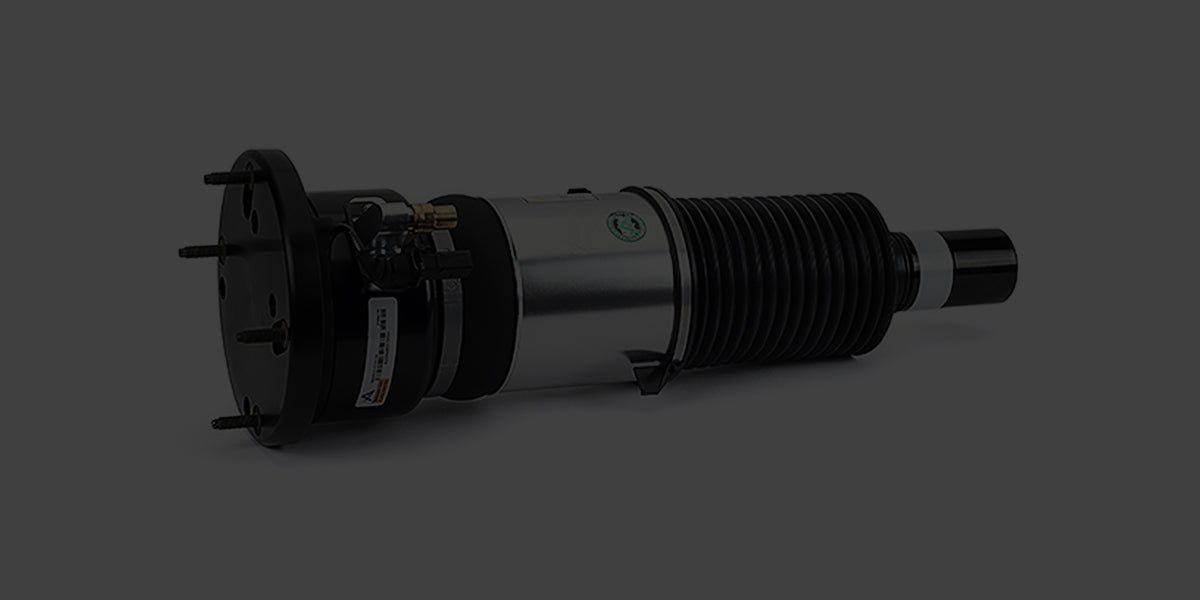
An adaptive strut or shock changes damping force electronically instead of relying on a fixed mechanical setting. That allows the vehicle to respond differently in Comfort, Sport, or other drive modes, and in many cases, each corner can adjust independently. For technicians, that means a suspension complaint may involve more than wear. It can also involve electrical communication, control strategy, or calibration.
About 75% of air suspension systems feature adaptive damping, and the technology is also common on many vehicles with conventional coil spring suspension. This is no longer niche work. It is increasingly standard service work, especially on vehicles with integrated air struts.
Understanding the System Before You Diagnose It
Technicians will usually encounter two broad categories of adaptive damping. Earlier systems often use single-valve technology with preset damping levels. Newer systems commonly use dual-valve or continuously variable control, allowing the system to command damping anywhere between soft and firm limits instead of switching between fixed steps.

|
In simple terms, the suspension control module reads vehicle and chassis data, then adjusts internal damper valves in milliseconds. That is why the same vehicle can feel soft and compliant in one mode, then firmer and more controlled in another. It is also important to remember that air struts combine the air spring and damper into one assembly. That can simplify packaging, but it also means that if either portion fails, the technician usually replaces the complete unit rather than servicing each component separately. |
Common Service and Installation Considerations
When replacing adaptive struts or shocks, installation discipline matters. Do not use an impact gun on top mounts. Torque values are critical. Three-stud top mounts are typically 25 to 30 ft-lbs, while single-stud mounts are typically 40 to 60 ft-lbs. Over-torquing can damage hardware and create avoidable comebacks. Always follow the manufacturer's instructions for the specific application.
Also, pay close attention to air line routing, connector engagement, and post-installation procedures. Check that air lines are not kinked, chafed, or stretched through suspension travel. Confirm that electrical connectors are fully seated to help prevent moisture intrusion or communication faults. Before returning the vehicle, cycle the suspension and complete any required calibration or relearn procedure.
What to Watch for During Diagnosis
Adaptive damping complaints are not always caused by a failed mechanical component. A harsh ride, poor control, warning messages, or inconsistent behavior can point to a failed damper, an electrical issue, a sensor problem, or a missed calibration. Use a scan tool to compare the control module's commands with the vehicle's actual behavior. If the system is requesting soft damping but the ride is still harsh, or commanding firm damping while the vehicle feels uncontrolled, the damper or its control circuit may be at fault.
Technicians should also inspect for external leakage, damaged connectors, poor routing, and related suspension wear that could be mistaken for a damping issue. Accurate diagnosis starts with understanding how the system should respond, then verifying that the mechanical, pneumatic, and electronic components are all doing their jobs.
Why Technician Education Matters
As adaptive damping becomes more common, technician education matters more. Understanding the difference between passive, single-valve adaptive, dual-valve adaptive, and advanced systems, such as MagneRide®, helps installers quote accurately, diagnose efficiently, and set better customer expectations. Arnott supports that work with training, installation guidance, technical support resources, and product-specific content built to help reduce comebacks and improve service outcomes.
Whether the job involves identifying the correct replacement, following proper installation procedures, or understanding how an adaptive system should respond after repair, the right technical support can make a difference. Arnott's goal is to provide shops and installers with practical resources they can use in the bay, enabling them to work more efficiently and with greater confidence.
Aktie: